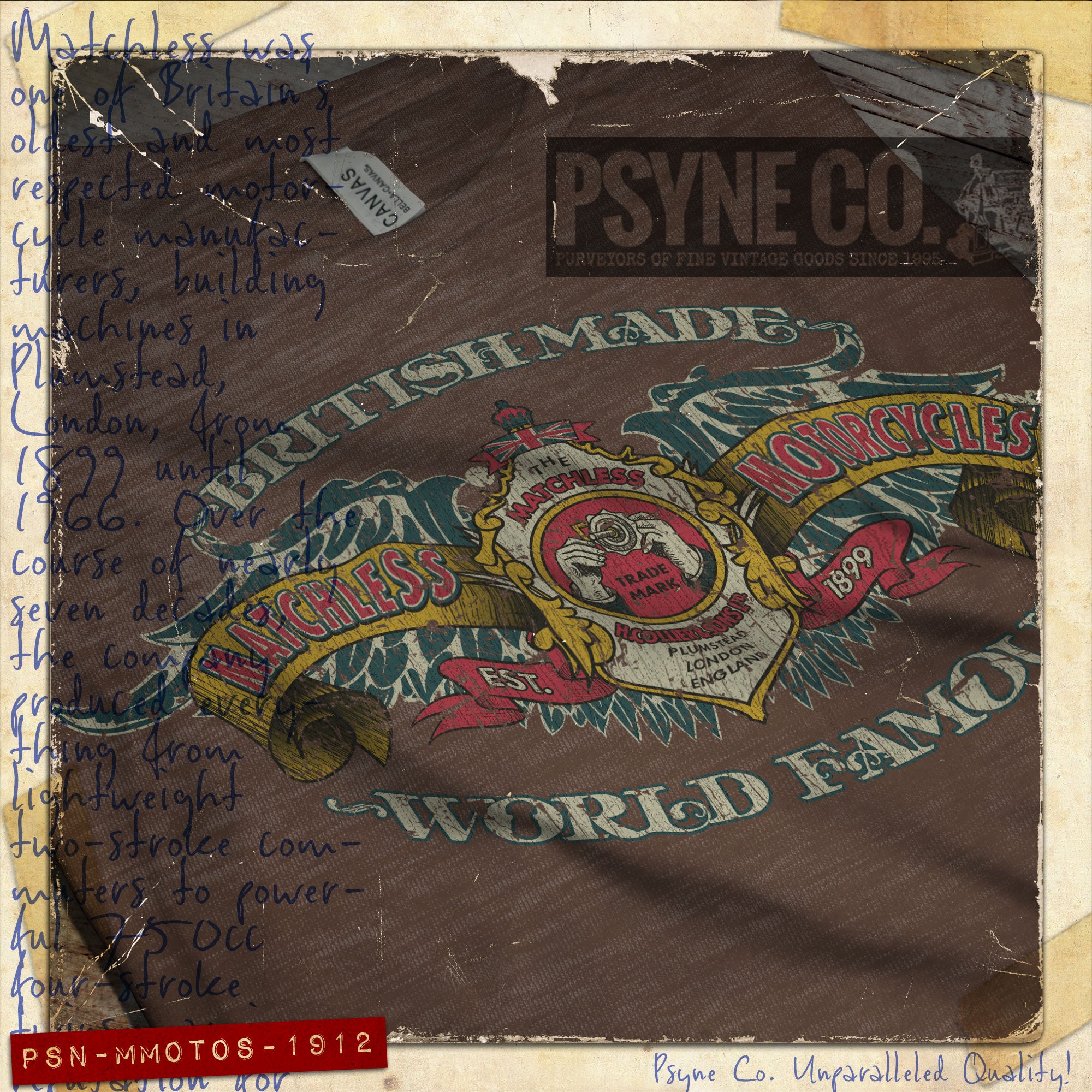
Few military motorcycles are as closely associated with the British Army during World War II as the Matchless G3/L. Rugged, dependable, and easy to maintain under the harshest conditions, the G3/L became the backbone of Britain’s wartime dispatch rider fleet. While tanks and trucks often receive the spotlight, it was motorcycles like the G3/L that kept armies connected, carrying vital messages, escorting convoys, and performing countless other duties across Europe, North Africa, and Asia.
Built for War
Manufactured by Associated Motor Cycles (AMC) under the Matchless name, the G3/L was developed specifically to meet the British War Office’s demand for a lighter, more capable military motorcycle. Early in the war, many military bikes were simply civilian machines painted olive drab, but combat quickly revealed the need for a purpose-built design.
Introduced in 1941, the G3/L was a significant improvement over its predecessors. The “L” in its designation stood for “Lightweight,” reflecting its reduced weight compared to earlier military motorcycles. Much of this savings came from using a distinctive Teledraulic telescopic front fork instead of the heavy girder forks common on prewar machines. The new suspension greatly improved handling over rough terrain while reducing rider fatigue during long missions.
Power came from a reliable 348cc single-cylinder, four-stroke engine producing roughly 16 horsepower. While hardly fast by civilian standards, it delivered excellent low-end torque and remarkable reliability—two qualities far more valuable on the battlefield than outright speed.
 The Dispatch Rider’s Lifeline
The G3/L’s most famous role was as the mount of British Army dispatch riders. Before portable radios became commonplace, military communications often depended on men who could physically carry orders between headquarters and front-line units.
Dispatch riders routinely traveled through artillery fire, bombed roads, mud, snow, and blackout conditions. A message delayed—or never delivered—could alter the outcome of an entire operation. The Matchless earned its reputation by starting reliably, surviving abuse, and requiring relatively simple maintenance that could often be performed in the field with basic tools.
These riders became some of the unsung heroes of the war, covering thousands of miles under dangerous conditions while relying almost entirely on their motorcycles.
More Than a Messenger
Although dispatch duty was its primary mission, the G3/L proved remarkably versatile. It served as:
- Messenger and courier transport
- Military police escort motorcycle
- Convoy control vehicle
- Airfield transportation
- Reconnaissance support
- General liaison transport for officers and staff
Its ability to travel where larger vehicles struggled made it invaluable in areas with damaged infrastructure or narrow roads.
A Motorcycle Built to Last
Military engineers appreciated the Matchless because it emphasized simplicity and durability over sophistication. The engine featured exposed valve gear that was easy to adjust, a robust gearbox, generous ground clearance, and sturdy construction that tolerated abuse.
Its telescopic forks represented one of the motorcycle’s greatest technological advances. While civilian manufacturers had begun experimenting with telescopic suspension before the war, the Matchless G3/L helped demonstrate how much better the system performed under military conditions. The improved ride reduced mechanical stress and allowed riders to maintain better control over rough roads and cross-country terrain.
The motorcycle could reach speeds approaching 65 mph under favorable conditions, but reliability and endurance—not speed—made it indispensable.
 Service Around the World
The Matchless G3/L served in nearly every theater where British and Commonwealth forces fought. It crossed the deserts of North Africa, navigated muddy roads in Italy, accompanied Allied troops through Northwest Europe after D-Day, and operated in India and Southeast Asia.
Thousands were also supplied to Allied nations through British military assistance programs, extending the motorcycle’s influence well beyond the United Kingdom.
By war’s end, approximately 80,000 G3/L motorcycles had been produced, making it one of Britain’s most important wartime military motorcycles.
A Lasting Legacy
After World War II, large numbers of surplus G3/Ls entered civilian life, where they became popular with commuters, farmers, and off-road enthusiasts thanks to their toughness and simple mechanics. Many remained in service for decades, and their military heritage made them favorites among collectors.
Today, restored Matchless G3/L motorcycles regularly appear at military vehicle shows and historical reenactments, serving as reminders of the vital role dispatch riders played in Allied victory. While they may lack the glamour of fighter aircraft or armored tanks, these dependable singles helped keep armies moving and commanders informed when reliable communication meant everything.
The Matchless G3/L stands as one of the finest examples of practical British engineering during World War II—a motorcycle designed not for speed or style, but for doing an extraordinarily important job, day after day, wherever the war demanded.