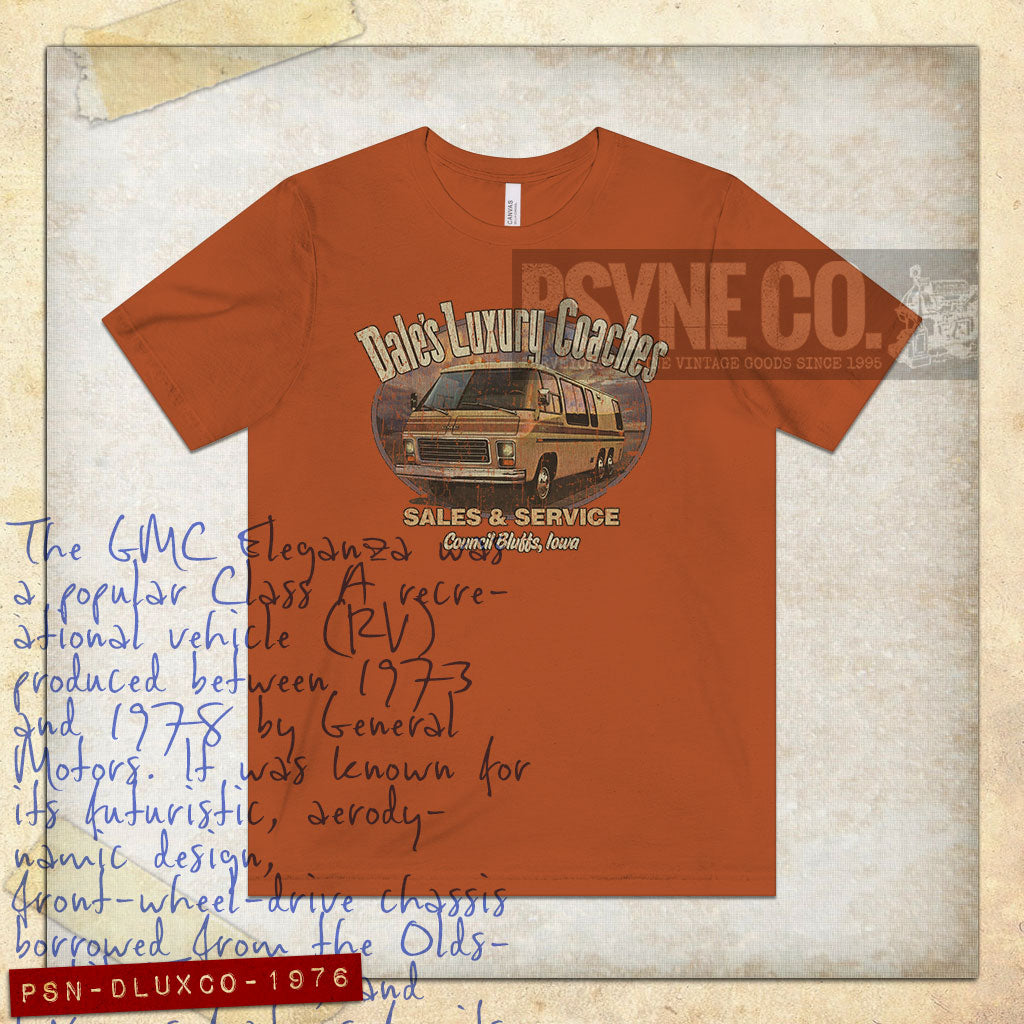
When GMC introduced its futuristic motorhome for the 1973 model year, it looked like nothing else on the road. At a time when most recreational vehicles were little more than boxy campers mounted on truck chassis, the GMC Motorhome was engineered from the ground up as a purpose-built luxury touring vehicle. With sleek styling, front-wheel drive, a low center of gravity, and automotive-like handling, it redefined what an RV could be and quickly became one of the most innovative recreational vehicles ever produced.
Unlike its competitors, the GMC Motorhome wasn’t built on a commercial truck frame. Instead, General Motors developed a unique integrated chassis that borrowed components from the Oldsmobile Toronado and Cadillac Eldorado, including the 455-cubic-inch Rocket V8 and front-wheel-drive transaxle. Beginning in 1977, the 455 was replaced by the larger 403-cubic-inch V8 to comply with tightening emissions regulations. The front-wheel-drive layout eliminated the need for a rear driveshaft, allowing the floor to sit much lower than conventional motorhomes. Combined with a sophisticated tandem rear suspension using air springs, the result was a remarkably stable and comfortable ride that owners often compared to driving a full-size luxury sedan rather than a bulky RV.
The Motorhome’s striking appearance was equally revolutionary. Its smooth fiberglass body, rounded nose, panoramic windshield, and hidden rear wheels gave it a modern, aerodynamic look decades before streamlined RVs became commonplace. Available in either a 23-foot or 26-foot version, it offered spacious interiors with multiple floorplans that included kitchens, bathrooms, lounges, and sleeping accommodations. High-end finishes, swivel captain’s chairs, rooftop air conditioning, and premium appliances made the GMC feel more like a mobile apartment than a camper.

GMC marketed the vehicle as a luxury touring coach for adventurous families and retirees, and buyers responded enthusiastically. More than 12,900 Motorhomes were built between 1973 and 1978 at GM’s Pontiac, Michigan facility. Although production ended after only six years—largely because of rising fuel prices, tightening emissions standards, and economic pressures rather than any shortcomings in the vehicle itself—the Motorhome had already established a devoted following.
That following remains remarkably strong today. Owners clubs, restoration specialists, and aftermarket suppliers continue to support the platform, making it one of the few vintage motorhomes that can still be maintained with relative ease. Modern upgrades such as fuel injection, overdrive transmissions, improved suspension components, solar power, lithium battery systems, and contemporary interiors have allowed many GMC Motorhomes to remain practical touring vehicles more than fifty years after they first rolled off the assembly line.
Today, the GMC Motorhome is widely regarded as one of the greatest recreational vehicles ever built. Its groundbreaking engineering, unmistakable styling, and loyal enthusiast community have elevated it from a luxury RV to an automotive icon. While countless motorhomes have come and gone over the decades, few have matched the originality or lasting influence of GMC’s bold experiment—a machine that proved an RV could be both luxurious and genuinely enjoyable to drive.