

Few everyday sights are as closely associated with modern Japan as the vending machine. Known as jidōhanbaiki, or simply jihanki, vending machines can be found almost everywhere—from crowded Tokyo intersections and railway stations to quiet residential neighborhoods, mountain roads, parking lots, and seemingly deserted stretches of countryside. Japan has millions of vending machines, and while their numbers have declined from their peak, the country remains famous for both their abundance and the remarkable variety of products they dispense.
Japan’s love affair with vending machines stretches back more than a century, but the culture really exploded during the economic boom of the 1960s and ’70s. Rising wages, urbanization, and an increasingly fast-paced lifestyle created ideal conditions for automated retail. Beverage companies discovered that a machine occupying only a few feet of sidewalk could sell drinks around the clock without requiring an employee or conventional storefront. By the 1980s and ’90s, vending machines had become an ordinary part of the Japanese landscape.
Drinks remain the undisputed stars of the vending-machine world. A typical machine may offer bottled water, soda, fruit drinks, tea, coffee, sports drinks, and energy drinks, often with seasonal selections changing throughout the year. One feature that continues to surprise visitors is the availability of both hot and cold beverages from the same machine. During winter, a customer might grab a steaming can of coffee or hot tea; during Japan’s humid summers, the same machine becomes a source of ice-cold refreshment. Color-coded buttons traditionally make the distinction obvious—blue for cold and red for hot.
 Coffee in particular became inseparable from Japanese vending-machine culture. Canned coffee took off in the late 1960s and early 1970s, with brands such as UCC, Georgia, Boss, and Pokka becoming fixtures of train platforms, streets, and workplaces. The image of a commuter cracking open a small can of coffee on the way to work became almost as familiar as the machines themselves.
But beverages are only part of the story. Depending on where you look, Japanese vending machines have sold cigarettes, beer, ice cream, snacks, instant noodles, rice, fresh eggs, fruit, flowers, batteries, umbrellas, toys, souvenirs, and countless other items. Food machines have ranged from simple packaged snacks to machines dispensing hot meals. Older examples serving bowls of noodles, hamburgers, toast sandwiches, and curry have developed something of a cult following, with enthusiasts traveling to surviving retro vending-machine locations to experience a piece of Shōwa-era roadside culture.
Part of the phenomenon comes down to practicality. Japan has long had relatively high labor and commercial real-estate costs, making a compact machine capable of operating 24 hours a day an attractive proposition. Dense cities provide enormous pedestrian traffic, while the machines also work remarkably well in places too isolated to support a staffed shop. Japan’s generally low levels of street vandalism and the willingness of property owners to devote tiny pieces of otherwise unused space to machines have also helped them flourish.
The machines themselves have continually evolved. Early mechanical models gave way to increasingly sophisticated electronic machines with illuminated displays, digital screens, cashless payment systems, and energy-saving technology. Many now accept transit IC cards and other electronic payments in addition to coins and bills. Some modern machines incorporate large touchscreens and dynamic advertising, a considerable technological leap from the rows of chunky buttons and glowing product windows that characterized earlier generations.
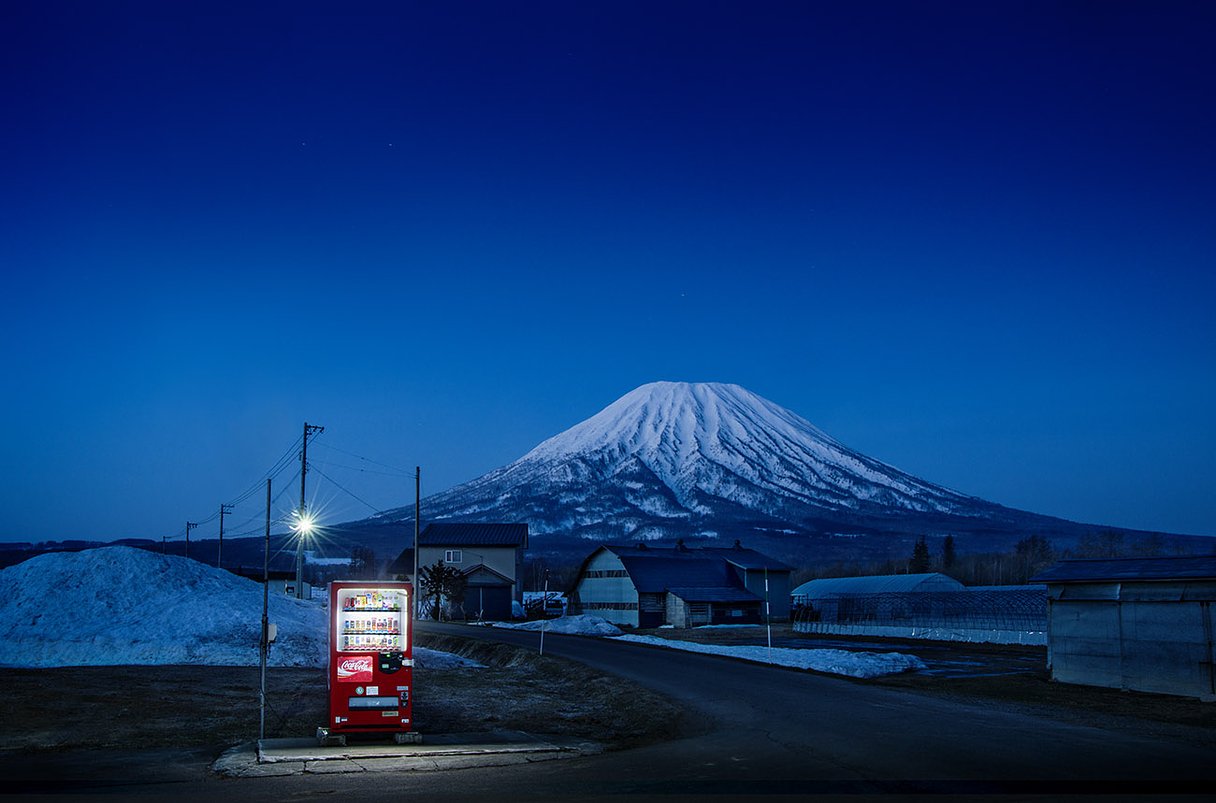
 There is also an aesthetic quality to Japan’s vending machines that helps explain their fascination overseas. At night, their bright rectangular faces illuminate otherwise dark streets and alleys like miniature convenience stores. A solitary glowing machine beside a country road or tucked between aging buildings has become an instantly recognizable image of contemporary Japan. Photographers have embraced that contrast between automated modernity and traditional or lonely surroundings, turning something completely mundane to Japanese residents into an international visual icon.
Despite their reputation for dispensing almost anything imaginable, the strangest Japanese vending-machine stories are often exaggerated. Novelty machines certainly exist, but the overwhelming majority sell decidedly ordinary products, particularly beverages. Their real significance is less about bizarre merchandise than about convenience. They are woven so thoroughly into everyday life that someone can walk out of a train station at midnight, cycle through a rural village, or take a break from work and find a cold tea or hot coffee waiting only a few steps away.
That ordinariness is ultimately what makes Japanese vending-machine culture so interesting. The machines represent a distinctly Japanese combination of convenience, compact design, automation, reliability, and attention to everyday needs. What began as a simple method of selling products without a clerk evolved into a ubiquitous part of the streetscape—and one of those small details of daily life that has become unmistakably associated with Japan.


