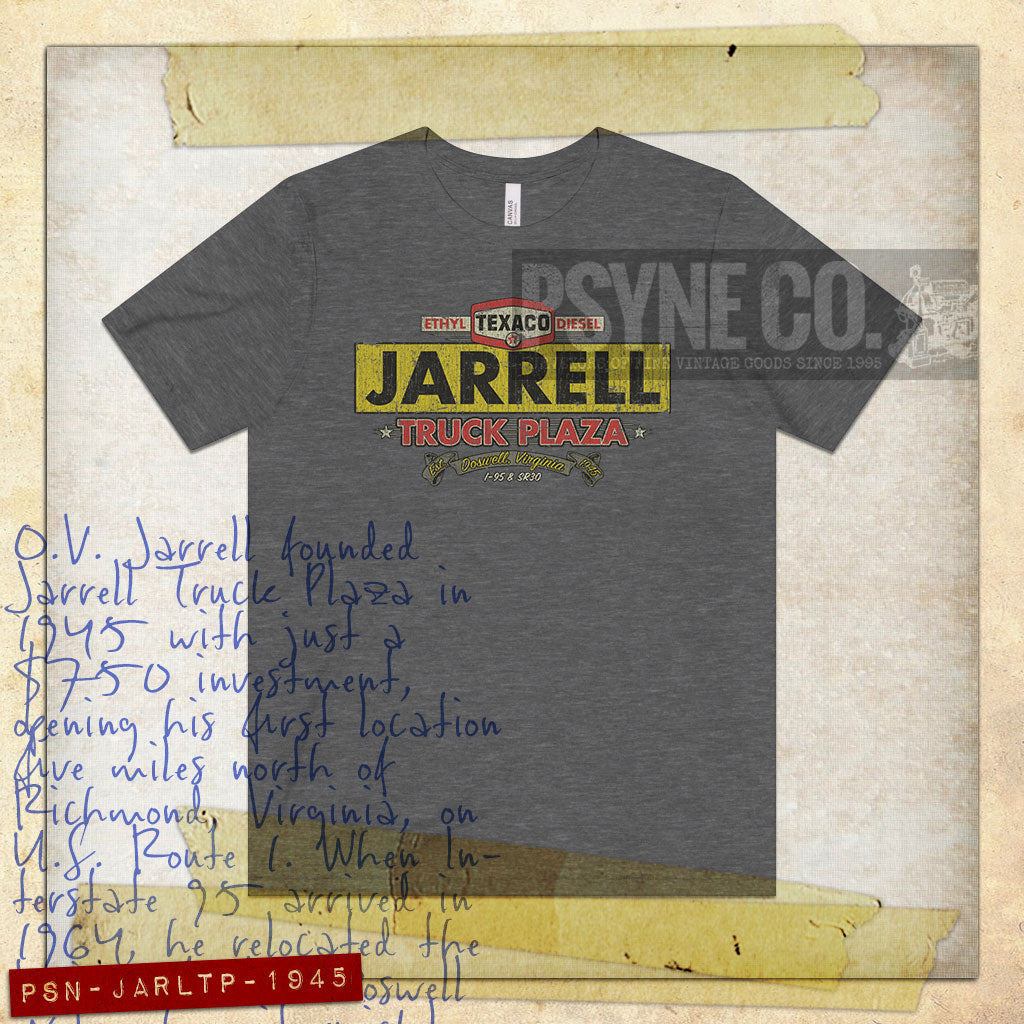
For decades, there was no more famous place for an American truck driver to stop than Jarrell Truck Plaza in Doswell, Virginia. More than just a fuel stop, it was a destination—a place where drivers could eat a hot meal, get a haircut, attend church, repair their rig, catch up with friends, and hear one of trucking’s most beloved radio personalities. At its peak in the 1970s and 1980s, Jarrell’s wasn’t simply a truck stop; it was a landmark of American highway culture.
The story began in 1945 when Oran V. “O.V.” Jarrell opened a small service station and truck stop along U.S. Route 1, about five miles north of Richmond, with only a $750 investment. As commercial trucking expanded after World War II, Jarrell built a reputation for treating drivers like family, reinvesting profits into better facilities and more services.
Everything changed when Interstate 95 opened through central Virginia. Recognizing that America’s trucking industry was moving from the old highways to the new Interstate system, Jarrell relocated his business in 1964 to the Doswell exit on I-95. The move proved visionary. Positioned along one of the busiest freight corridors on the East Coast, Jarrell Truck Plaza quickly became a must-stop location for thousands of truckers every day.
By the late 1970s, the plaza had grown into a multimillion-dollar operation generating more than $1 million in monthly revenue. Newspapers routinely referred to it as “the world’s busiest truck stop,” and the title was difficult to dispute. Diesel islands could fuel numerous tractor-trailers simultaneously, while the sprawling complex offered nearly every service a long-haul driver could need under one roof.
Unlike many truck stops of the era, Jarrell’s focused on serving the driver’s entire lifestyle rather than simply selling fuel. The property featured a 24-hour cafeteria and restaurant, motel, truck wash, repair garage, chrome shop, barber shop, showers, driver’s lounge, general store, and even an All Faiths Chapel, where travelers could pause for a few quiet moments before getting back on the road. The philosophy was simple: if a trucker needed it, Jarrell’s tried to provide it.
One o f the plaza’s most memorable attractions wasn’t found inside the restaurant or the repair bays—it came over the radio. For nearly two decades, the legendary *Big John Trimble Show* broadcast live overnight from a studio inside Jarrell Truck Plaza on Richmond powerhouse WRVA-AM. Big John mixed classic country music, trucker call-ins, song dedications, jokes, road reports, and friendly conversation that kept countless drivers company through the long overnight miles. Thanks to WRVA’s powerful 50,000-watt clear-channel signal, the program reached listeners across much of the eastern United States, making Big John one of trucking’s most recognizable radio voices.
O.V. Jarrell eventually retired, and the property passed through several owners over the years. It was later known as the All-American Travel Plaza before continuing under other names, reflecting the changing landscape of the truck stop industry. Although modern travel centers have largely replaced the independently owned truck plazas that once dotted America’s highways, the Doswell location continues operating as a truck stop today, preserving a connection to one of the most celebrated stops in trucking history.
To generations of professional drivers, Jarrell Truck Plaza represented the golden age of trucking—a time when truck stops were gathering places as much as businesses, and when the people behind the counter often knew regular customers by name. Long after the iconic Texaco sign faded from the Virginia skyline, Jarrell’s remained a symbol of an era when America’s highways were built on hard work, hospitality, and the men and women who kept freight moving.