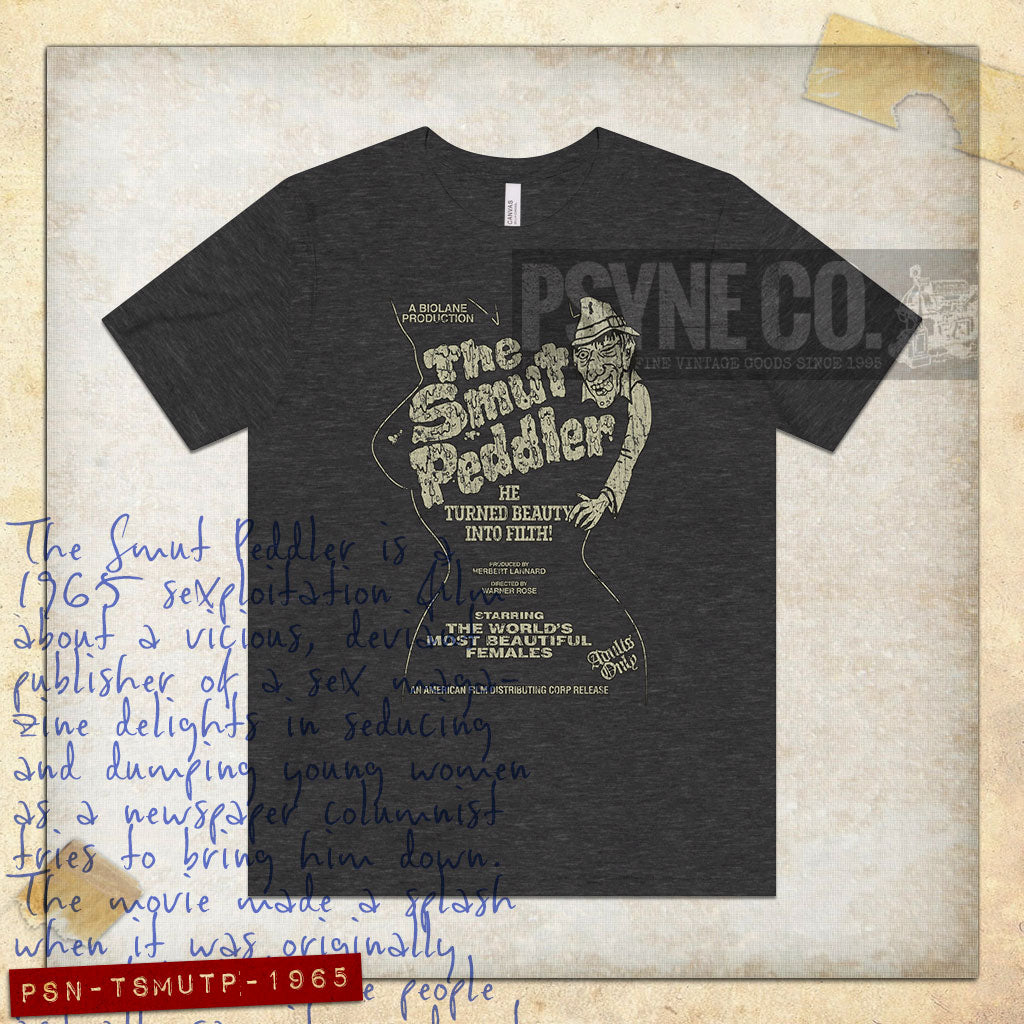
Long before pornography became instantly accessible, America’s adult-entertainment business was built on cheap paperbacks, mail-order catalogs, newsstand magazines, and a constant game of cat and mouse with police, postal inspectors, prosecutors, and censorship groups. What critics dismissively called “smut” developed from a shadowy trade into a highly visible industry during the middle decades of the twentieth century, reflecting changing attitudes toward sex, censorship, and freedom of expression.
Sexually explicit literature was hardly new to America. Erotic books and photographs had circulated privately throughout the nineteenth and early twentieth centuries, but distribution was severely restricted. The federal Comstock Act of 1873 gave postal authorities broad powers to prevent supposedly obscene material from traveling through the mail. Even during the 1930s and ’40s, publishers and booksellers risked prosecution for material that today might appear relatively tame. Postal officials also wielded enormous influence over magazines because favorable mailing rates were crucial to the industry.
The paperback revolution after World War II changed everything. Inexpensive books could suddenly be mass-produced and sold outside traditional bookstores, appearing on racks in drugstores, bus terminals, corner markets, newsstands, and other everyday businesses. Publishers quickly discovered that lurid cover art and provocative titles sold books. Crime novels, pulp fiction, romance stories, lesbian-themed paperbacks, and supposedly educational books about marriage and sexuality frequently blurred the boundary between legitimate publishing and material designed primarily for titillation. By the early 1950s, anti-obscenity organizations were campaigning against hundreds of paperback titles, while local authorities pressured retailers and distributors to remove objectionable books.
Magazines were undergoing a similar transformation. Earlier “girlie” and cheesecake publications generally relied on pinup photography, suggestive humor, and models who were partially clothed or strategically posed. Playboy, launched by Hugh Hefner in 1953, dramatically expanded the market by packaging nude photography alongside fiction, interviews, cartoons, lifestyle journalism, and writing by prominent authors. It became enormously successful, eventually selling more than a million copies a month during its early growth. Rather than presenting itself as an underground pornography magazine, Playboy marketed sexual sophistication as part of an aspirational modern lifestyle.

Meanwhile, a much less respectable marketplace flourished beneath the mainstream. Adult bookstores and newsstands carried cheaply printed digest magazines, erotic novels, photo booklets, fetish publications, and increasingly explicit paperbacks. Some publishers operated through mail-order businesses advertised in the backs of men’s magazines. The sensational packaging was often as important as the contents: covers promised forbidden encounters, scandalous confessions, and glimpses into supposedly secret sexual worlds.
The courts played a major role in determining how far publishers could go. In the landmark 1957 case Roth v. United States, the Supreme Court held that obscenity itself was not protected by the First Amendment, but it also established a more specific standard for determining what qualified as obscene. The decision became part of a decades-long judicial struggle to separate constitutionally protected sexual expression from legally punishable obscenity.
The resulting uncertainty created opportunity. During the 1960s, publishers repeatedly pushed against the boundaries established by courts and local authorities. Ralph Ginzburg became one of the era’s best-known provocateurs through publications such as EROS, Liaison, and the deliberately sensational Housewife’s Handbook on Selective Promiscuity. His battles with federal obscenity laws demonstrated that publishers were not merely selling sex—they were testing how far American free-speech protections extended.
By the late 1960s and early ’70s, the sexual revolution accelerated the transformation. Nudity became more common in mainstream entertainment, social attitudes toward premarital sex loosened, and adult bookstores became conspicuous fixtures in entertainment districts of cities such as New York, Los Angeles, San Francisco, Chicago, and Boston. Material that would once have been circulated discreetly through the mail could now be purchased openly by adults, although raids, arrests, zoning disputes, and obscenity prosecutions remained common.

The pornography business also became increasingly competitive. As publishers fought for attention on crowded newsstands, magazines moved beyond the relatively restrained sophistication of Playboy. Bob Guccione’s Penthouse offered more explicit photography, while Larry Flynt pushed considerably further with Hustler, first published in 1974. Flynt had previously operated a chain of adult clubs before transforming a promotional newsletter into a nationally distributed magazine. Hustler deliberately embraced a crude, confrontational identity and became the subject of repeated obscenity prosecutions.
The legal landscape shifted again with Miller v. California in 1973. The Supreme Court established what became known as the Miller test, which asked whether a work appealed to prurient interests according to contemporary community standards, depicted specifically defined sexual conduct in a patently offensive manner, and lacked serious literary, artistic, political, or scientific value. Importantly, sexually explicit material was not automatically legally obscene simply because it was pornographic.
That distinction helped create the peculiar adult marketplace of the 1970s and early ’80s. Pornography was simultaneously more visible than ever and still legally precarious. A magazine or paperback openly sold in Manhattan or San Francisco might encounter prosecution somewhere else because “community standards” could differ from one jurisdiction to another. Publishers, distributors, theater owners, and bookstore operators therefore had to consider not only what consumers wanted but where particular material could safely be sold.
By then, the word “smut” covered an enormous range of products. There were glossy national magazines, cheaply produced pulp novels, adult comic books, fetish publications, swinger magazines, personal-ad newspapers, mail-order photo sets, and countless regional titles. Adult bookstores increasingly supplemented printed material with 8mm films and eventually videocassettes. The humble dirty paperback and newsstand magazine were becoming pieces of a much larger commercial pornography industry.
Their cultural influence extended beyond pornography itself. Battles over adult publishing forced Americans to confront difficult questions about censorship, privacy, morality, and the limits of the First Amendment. Courts repeatedly struggled to define obscenity, while publishers learned that controversy could be both a legal liability and an extraordinarily effective form of advertising.
The golden age of the American adult paperback and magazine would eventually fade. Home video began transforming pornography during the 1980s, followed by cable television, DVDs, and ultimately the internet. Many of the once-ubiquitous adult bookstores and newsstands disappeared with them. Yet for several decades, brightly colored paperbacks hidden behind the counter and plastic-wrapped magazines displayed on the top rack represented something genuinely transgressive. They were products of an era when obtaining forbidden material required physically entering a store, ordering from a suspicious advertisement, or asking a clerk for something deliberately kept just out of sight—and when the battle over what Americans were allowed to read was fought one book, magazine, newsstand, and courtroom at a time.