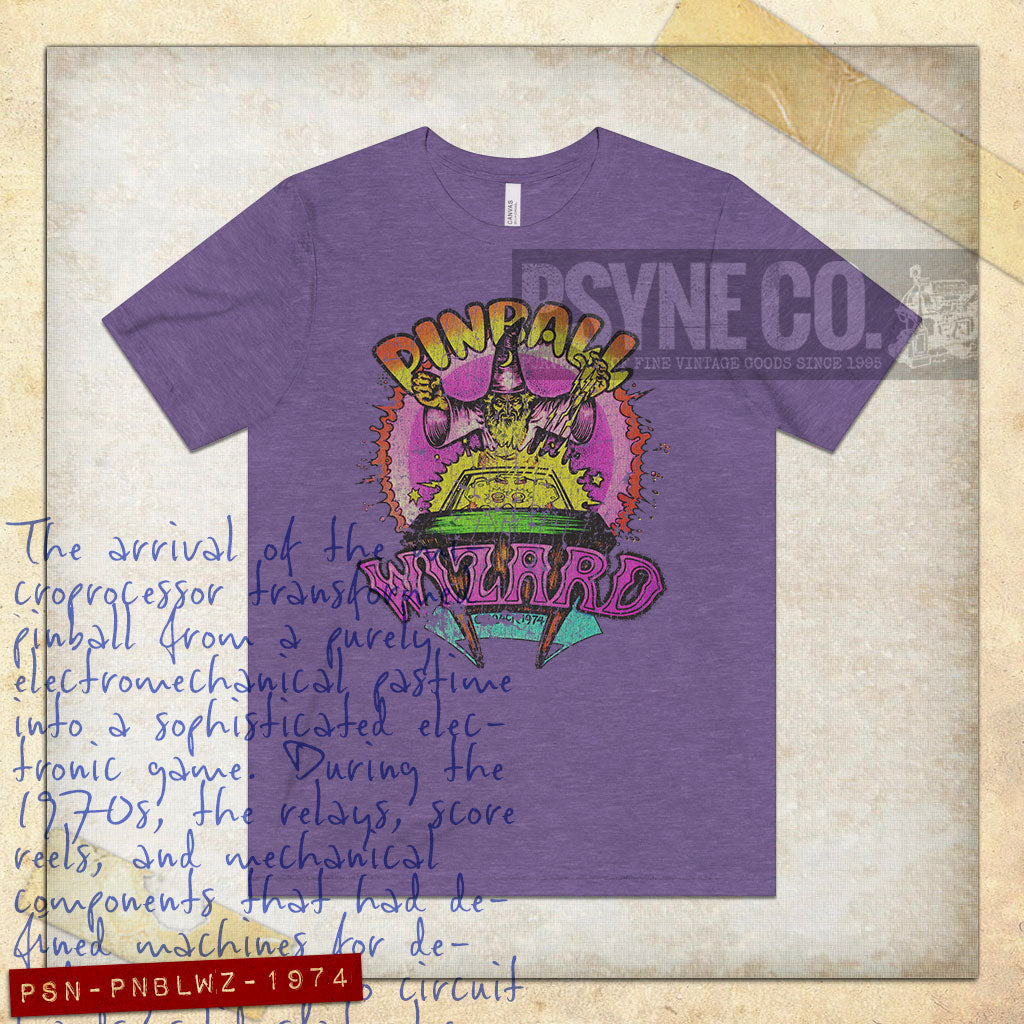
Long before video games took over arcades, pinball was the undisputed king of coin-operated entertainment. With its flashing lights, ringing bells, clattering bumpers, and unmistakable sound of a steel ball ricocheting around a playfield, pinball offered an irresistible combination of skill, luck, and sensory overload. From smoky bars and bowling alleys to pizza parlors and dedicated arcades, these colorful machines became fixtures of American popular culture, captivating generations of players determined to beat the high score and earn one more free game.
 Pinball’s origins can be traced to the 18th-century French game of bagatelle, in which players used a cue to propel balls across an inclined wooden table filled with pins and scoring holes. During the 19th century, variations of the game spread throughout Europe and America, eventually incorporating spring-loaded plungers that eliminated the need for a cue. By the early 1930s, coin-operated tabletop games such as Gottlieb’s Baffle Ball and Bally’s Ballyhoo had become enormously popular, offering Depression-era Americans a few moments of affordable entertainment. These early machines were entirely mechanical, lacked flippers, and relied largely on gravity and chance to determine where the ball landed.
The introduction of electricity during the 1930s transformed pinball from a simple mechanical diversion into something considerably more exciting. Electric lights, automatic scoring mechanisms, bells, and powered bumpers gradually became standard equipment, turning the machines into elaborate attractions. Chicago emerged as the center of the pinball manufacturing industry, with companies such as Gottlieb, Bally, and Williams competing to develop increasingly sophisticated games. By the 1940s, pinball machines had become common sights in taverns, amusement halls, and neighborhood businesses across the country.
Despite its growing popularity, pinball had a serious image problem. Because early machines relied heavily on chance and some offered cash payouts or prizes, authorities frequently associated them with gambling and organized crime. In 1942, New York City Mayor Fiorello La Guardia launched an aggressive campaign against pinball, declaring the machines a menace to society and ordering thousands confiscated. In one particularly memorable publicity stunt, the mayor personally participated in smashing confiscated machines with a sledgehammer. New York wasn’t alone, as numerous other American cities enacted similar restrictions, forcing pinball underground in some locations while it continued to flourish elsewhere.
The industry’s biggest breakthrough came in 1947 when Gottlieb introduced Humpty Dumpty, the first commercially successful pinball machine equipped with player-controlled electromechanical flippers. Suddenly, players could actively influence the ball’s movement rather than simply launch it and hope for the best. The innovation fundamentally changed the game, introducing an entirely new level of skill and strategy. By the 1950s, manufacturers had refined the familiar two-flipper arrangement near the bottom of the playfield, establishing the basic configuration that remains standard today.
Throughout the 1950s and 1960s, pinball became deeply intertwined with American youth culture. Teenagers gathered around machines in diners, bowling alleys, pool halls, and amusement arcades, competing for high scores while feeding an endless supply of nickels, dimes, and quarters into the coin slots. Manufacturers responded with increasingly elaborate designs featuring colorful backglass artwork, mechanical targets, spinning wheels, pop bumpers, and imaginative themes ranging from space exploration and sports to hot rods and beautiful women. Pinball also developed something of a rebellious reputation, an image reinforced by its association with juvenile delinquency, rock ‘n’ roll, and establishments where respectable parents might prefer their children not spend their afternoons.
 By the late 1960s, pinball had become such a recognizable cultural phenomenon that British rock band The Who made it a central element of their 1969 rock opera Tommy. The album’s famous song, “Pinball Wizard,” helped immortalize the game in popular music, while the 1975 film adaptation further cemented its place in rock history. The decade also witnessed pinball’s gradual rehabilitation as a legitimate game of skill. In 1976, pinball enthusiast and writer Roger Sharpe famously demonstrated his abilities before the New York City Council, helping convince lawmakers to overturn the city’s decades-old ban. After 34 years, pinball was finally legal in New York again.
The late 1970s and early 1980s ushered in another revolution as solid-state electronics began replacing the complicated networks of mechanical relays that had traditionally operated pinball machines. Microprocessors allowed manufacturers to introduce digital scoring, synthesized sound effects, speech, elaborate lighting sequences, and increasingly complex game rules. Machines such as Bally’s Eight Ball (1977), Williams’ Gorgar (1979), and Black Knight (1980) helped define this new generation of technologically advanced pinball. The machines became louder, faster, and more visually spectacular, although they soon faced serious competition from an entirely new form of arcade entertainment: video games.
While Space Invaders, Pac-Man, and Donkey Kong captured much of the public’s attention during the early 1980s, pinball refused to disappear. Manufacturers continued developing innovative machines, and the late 1980s and early 1990s brought another golden age of pinball design. Sophisticated games featured elaborate ramps, multiball modes, animated displays, moving mechanical toys, and licensed themes based on popular movies, television programs, and rock bands. Bally’s The Addams Family, released in 1992, became the best-selling pinball machine of all time, with more than 20,000 units produced. Other celebrated titles included Terminator 2: Judgment Day, Twilight Zone, Indiana Jones: The Pinball Adventure, and Medieval Madness.
Unfortunately, the boom couldn’t last forever. By the late 1990s, changing entertainment habits, declining arcade attendance, and increasingly expensive manufacturing costs had taken a serious toll on the industry. In 1999, Williams, one of pinball’s most influential manufacturers, abandoned the business entirely, leaving relatively few companies still producing new machines. For a time, it appeared that pinball might become little more than a nostalgic reminder of a bygone era.
 Instead, pinball found a new generation of enthusiasts. Collectors began restoring vintage machines, dedicated pinball museums and specialty arcades opened, and competitive pinball tournaments attracted players from around the world. Manufacturers such as Stern Pinball helped keep the industry alive, while newer companies introduced modern machines featuring LED lighting, high-definition displays, sophisticated electronics, and themes drawn from contemporary entertainment. What once seemed destined for extinction has experienced a remarkable revival, with pinball finding enthusiastic audiences in bars, breweries, retro arcades, and private game rooms.
Part of pinball’s enduring appeal lies in something that modern video games simply cannot replicate: the physical experience of playing. Every bounce, ricochet, and near miss involves a real steel ball moving through a mechanical world governed by gravity, momentum, and the player’s reflexes. No two games unfold exactly alike, and even experienced players can watch a promising game end in spectacular frustration when the ball slips between the flippers.
More than a century after its earliest predecessors appeared, pinball remains one of the most distinctive forms of interactive entertainment ever created. It’s noisy, unpredictable, occasionally infuriating, and endlessly addictive. Whether you’re chasing a billion-point score on a modern machine or dropping a quarter into a battered old Bally at the neighborhood bar, the objective remains the same: keep that silver ball moving for as long as possible. And whatever you do, don’t tilt.