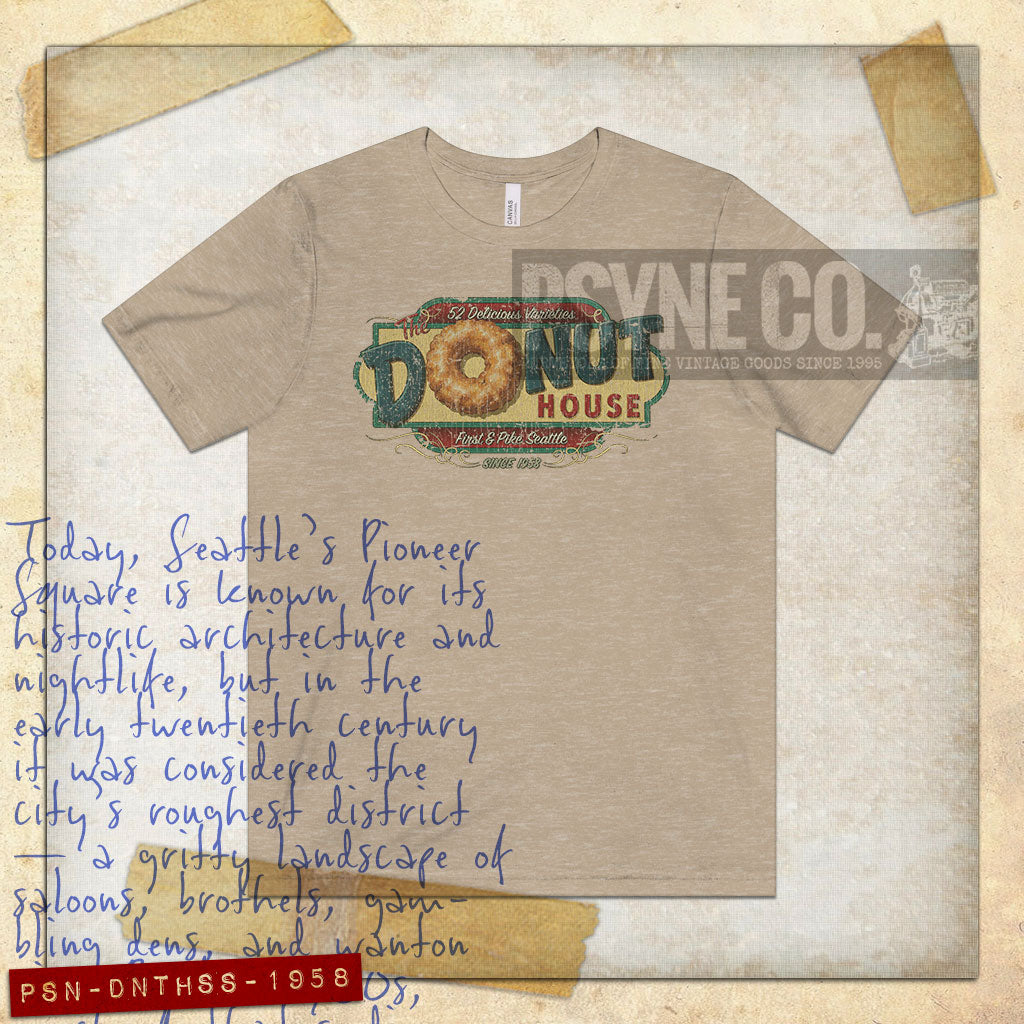
Today, Seattle’s Pioneer Square is known for its historic architecture and nightlife, but in the early twentieth century, it was considered the city’s roughest district — a gritty landscape of saloons, brothels, gambling dens, and wanton vice. By the 1960s, much of that seedier energy had migrated north along First Avenue, where peep shows, adult bookstores, pawn shops, tattoo parlors, dive bars, and strip clubs transformed the corridor into one of Seattle’s most notorious stretches. At the intersection of urban decay and carnality stood The Donut House, a twenty-four-hour shop that opened in 1958 at First and Pike, serving dozens of fresh donut varieties around the clock.
As the neighborhood deteriorated during the ‘70s, the shop developed a reputation that extended far beyond coffee and pastries. After the original owners sold the business, the new owner allowed Seattle’s street kids to congregate there, often giving them food in exchange for helping around the restaurant. Over time, troubling stories began surfacing about drugs, prostitution, violence, and runaway teens connected to the hangout. In 1979, a fatal stabbing in the doorway intensified public attention, and local newspapers increasingly portrayed The Donut House as a gathering place for pimps, dealers, hustlers, and downtown drifters.
By 1980, a major criminal investigation led police to several teenagers tied to crimes in the area, and their testimony implicated the shop’s owner in a range of illegal activity, including robbery schemes that had plagued Seattle. The owner was eventually sent to prison, bringing an end to one of downtown Seattle’s most infamous late-night institutions. Though long gone, The Donut House remains part of Seattle folklore — remembered as both a symbol of the city’s gritty past and a reflection of the chaos that once defined First Avenue.