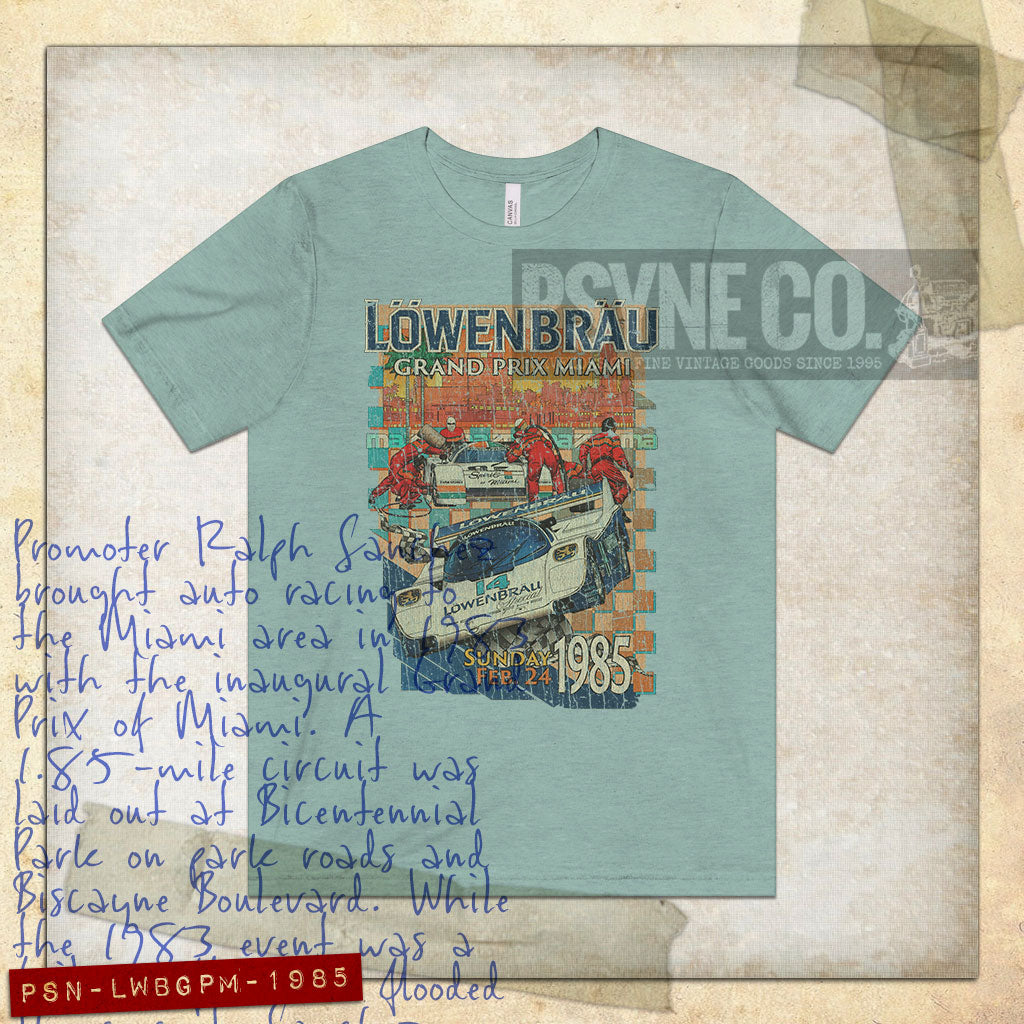
Long before the American craft-beer revolution introduced drinkers to a seemingly endless variety of European styles, Löwenbräu was one of the names that defined imported beer in the United States. The Munich brewery traces its documented history to the 14th century and eventually became one of Bavaria’s most famous brewing houses. By the 20th century, its familiar lion emblem and blue-and-gold labels were recognized far beyond Germany, and in America Löwenbräu developed an image as an upscale alternative to the country’s increasingly standardized domestic lagers.
Löwenbräu had an American presence even before World War II. New York restaurateur and beer importer Hans Holterbosch recognized the potential market for Munich beer among American consumers and became closely associated with its U.S. distribution. After the war, the brand received another boost from American servicemen stationed in Germany, many of whom became familiar with Bavarian beer and continued looking for it after returning home. Over the following decades, Löwenbräu cultivated a strong premium reputation in the United States, becoming for many Americans almost synonymous with Munich beer.
By the 1960s and early 1970s, Löwenbräu occupied an enviable position in the American import market. Its advertisements emphasized centuries of Munich brewing tradition, Bavarian barley and hops, Alpine imagery, and the romance of drinking an authentic German beer. The brand was marketed less as an everyday thirst quencher than as something sophisticated and distinctly European—a beer for dinners, parties, restaurants, and special occasions.
 The biggest change came during the mid-1970s. In 1974, Löwenbräu entered an agreement that gave Philip Morris, parent company of Miller Brewing, exclusive U.S. distribution rights, with Miller becoming the company’s American partner. Löwenbräu’s own history records 1974 as the year it entered its first licensing agreements with the United States and England. Miller initially continued importing genuine Munich-brewed Löwenbräu, but the arrangement ultimately allowed the beer to be produced under license in American breweries.
For Miller, the German brand represented an opportunity to attack the lucrative “super-premium” segment of the American beer business. The company positioned Löwenbräu as a competitor to Anheuser-Busch’s Michelob and backed it with enormous national advertising campaigns. By 1977, however, Löwenbräu sold in America was being brewed domestically by Miller rather than shipped across the Atlantic.
That decision created one of the more memorable controversies in American beer marketing. Miller’s advertisements continued to lean heavily on Löwenbräu’s German identity and Munich heritage even though the product on American shelves was now made in the United States. Anheuser-Busch asked the Federal Trade Commission to investigate Miller’s marketing, arguing that consumers could be left with the impression that they were purchasing an imported German beer. Consumers raised similar objections, particularly because Löwenbräu could command prices associated with imported or super-premium beer.
More damaging to the brand’s reputation was the beer itself. Miller adapted Löwenbräu for American mass production rather than simply reproducing the Munich product exactly. The American formulation differed from the German beer and became a point of contention for drinkers who associated the Löwenbräu name with traditional Bavarian brewing. What had once been one of America’s best-known authentic German imports increasingly became perceived as an American premium lager wearing a German name.
The Miller years nevertheless made Löwenbräu highly visible. Its commercials were everywhere during the late 1970s and 1980s, presenting an idealized world of celebrations, elegant gatherings, good food, and European sophistication. The advertising was memorable enough to become part of American popular culture, even inspiring parody on Saturday Night Live. But the brand never succeeded in displacing Michelob as Miller had hoped, and over time its American sales and cultural presence diminished.
 Another major change arrived in 1999, when Labatt USA took over the U.S. rights from Miller. The move was promoted as a return to Löwenbräu’s roots. Contemporary reports noted that the German brewery had been unhappy with Miller’s altered formulation, although the licensing agreement had limited what it could do about it. Labatt announced that the beer would once again use the original Munich formula, an attempt to restore the authenticity that had originally made the Löwenbräu name valuable in America.
Labatt subsequently brewed Löwenbräu in Canada for the North American market, but that arrangement ended in 2002, after which Munich-brewed Löwenbräu again began reaching North America, although at nowhere near the prominence the brand had enjoyed during its heyday.
Löwenbräu’s American history is ultimately a fascinating example of how important authenticity can be to an imported brand. In the postwar decades, Löwenbräu represented something exotic to American drinkers: a genuine Munich beer backed by centuries of Bavarian tradition. Miller transformed it into a nationally advertised American super-premium brand and dramatically increased its exposure, but in doing so blurred the very distinction that had made Löwenbräu special. Today its blue-and-gold lion still evokes Munich beer halls and Oktoberfest, while vintage bottles, signs, trays, and advertisements recall a period when ordering a Löwenbräu carried considerably more cachet at an American bar or dinner table.