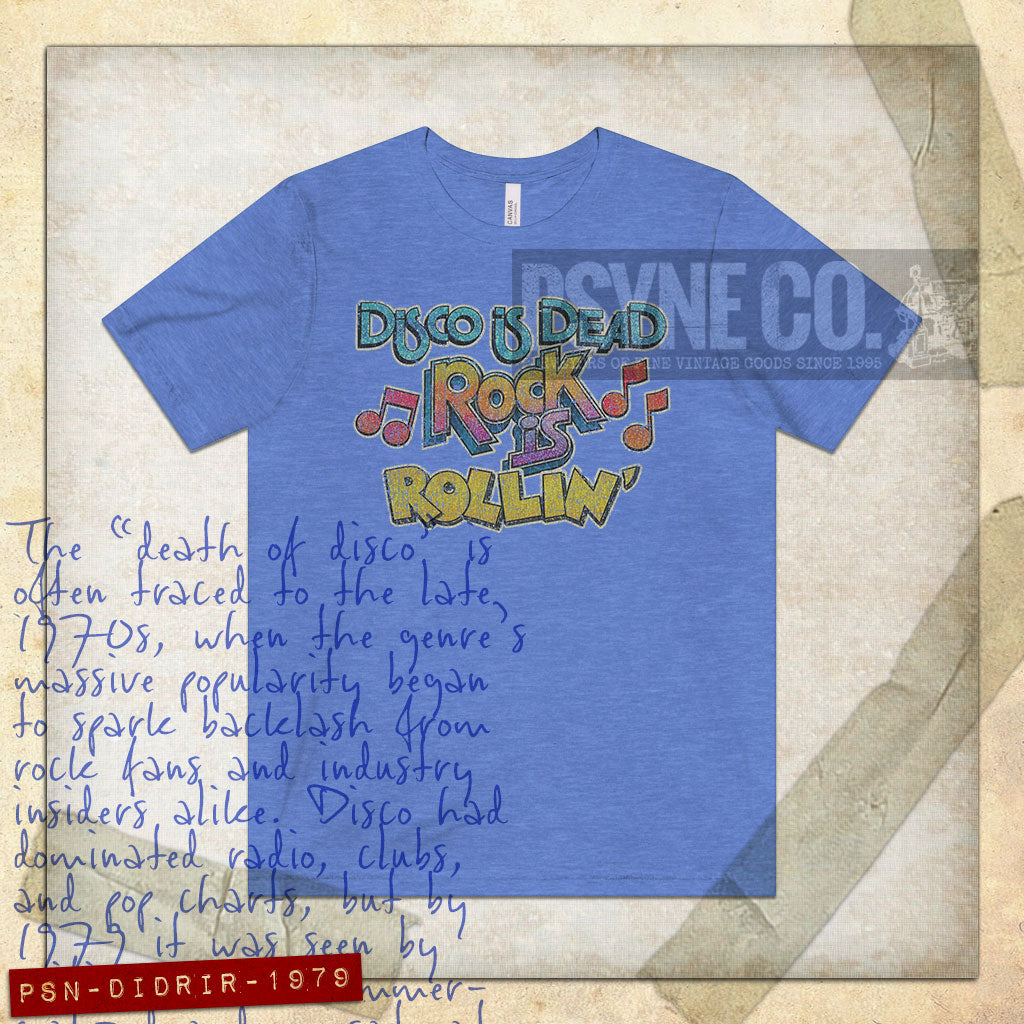
By the late 1970s, disco seemed almost impossible to escape. The pulsing four-on-the-floor beat that had emerged from underground dance clubs earlier in the decade had exploded into mainstream culture. Disco records dominated radio and the charts, nightclubs sprang up across America, and the phenomenal success of Saturday Night Fever in 1977 helped turn the music into a full-blown cultural craze. Even established rock artists began incorporating dance rhythms into their music. But almost as quickly as disco conquered popular culture, a backlash developed—and by the dawn of the 1980s, rock was once again asserting itself as one of America’s dominant musical forces.
 Disco Takes Over
Disco’s roots stretched back to predominantly Black, Latino, and gay dance clubs in cities such as New York and Philadelphia. Artists including Donna Summer, Gloria Gaynor, Chic, KC and the Sunshine Band, and the Village People helped bring the sound to a much larger audience. Record companies soon realized there was money to be made, and by the second half of the decade nearly everyone seemed eager to get a piece of the action.
The Bee Gees became closely associated with the phenomenon through Saturday Night Fever, while artists better known for other genres experimented with disco-influenced records. The Rolling Stones scored a hit with the dance-oriented “Miss You,” Rod Stewart released “Da Ya Think I’m Sexy?,” and KISS ventured onto the dance floor with “I Was Made for Lovin’ You.”
Success inevitably encouraged overexposure. Record labels flooded stores with disco releases, radio stations changed formats, Hollywood produced disco-themed movies, and seemingly every consumer product imaginable was given a disco makeover. By 1979, what had begun as an underground club culture had become a heavily commercialized mass-market phenomenon.
 “Disco Sucks”
For some rock fans, disco represented everything they disliked about late-’70s popular music. Its polished production, dance-club culture, and emphasis on rhythm stood in sharp contrast to the guitar-driven rock they preferred. The slogan “Disco Sucks” began appearing on T-shirts, bumper stickers, and radio promotions.
The backlash reached its most notorious moment on July 12, 1979, with Disco Demolition Night at Chicago’s Comiskey Park, where Chicago White Sox fans were encouraged to bring disco records to a baseball doubleheader in exchange for discounted admission. Between games, a crate filled with records was blown up on the field.
The stunt descended into chaos as thousands of spectators poured onto the playing field, damaging the turf and forcing the White Sox to forfeit the second game. Disco Demolition Night has since been interpreted in sharply different ways. For many participants, it was an expression of hostility toward a musical fad they disliked; historians and cultural critics have also examined how parts of the broader anti-disco movement intersected with hostility toward the Black, Latino, and gay communities closely associated with disco’s origins.
Whatever the motivations of individual fans, the event became an enduring symbol of disco’s growing cultural backlash.
 Rock Never Actually Went Away
The familiar idea that rock suddenly “returned” after disco can be misleading because rock had remained enormously popular throughout the disco era. Led Zeppelin, Aerosmith, Queen, Fleetwood Mac, Boston, Foreigner, Cheap Trick, Van Halen and numerous other rock acts sold millions of records during the second half of the 1970s.
At the same time, punk was stripping rock back to its foundations. The Ramones, Sex Pistols, Clash, Dead Boys and other bands rejected much of the elaborate production and musicianship associated with mainstream ’70s rock. Their influence would soon feed into post-punk, hardcore and alternative music.
Hard rock was also undergoing a generational change. Van Halen’s 1978 debut showcased Eddie Van Halen’s extraordinary guitar playing and offered a glimpse of the flashy, high-energy rock that would flourish during the following decade. AC/DC’s Highway to Hell arrived in 1979, followed by the massively successful Back in Black in 1980. Judas Priest, Scorpions, and other heavy bands were likewise helping set the stage for metal’s enormous 1980s audience.
 Disco’s Fall
There was no single day on which disco died. Instead, the commercial boom collapsed as public tastes, radio programming, and record-industry priorities shifted around 1979 and 1980. The word “disco” itself quickly became commercially unfashionable, and many clubs and radio stations abandoned the label.
But the music did not actually disappear.
Its influence continued through post-disco, funk, dance-pop, Hi-NRG, house, and electronic dance music. Chic’s rhythmic guitar style, Giorgio Moroder’s synthesizer-driven productions, and the bass-heavy grooves of late-’70s dance records became building blocks for much of the music that followed. Michael Jackson’s Off the Wall, released in 1979, demonstrated how dance music could evolve beyond the increasingly unfashionable disco label.
So while people proclaimed that “disco was dead,” many of its musical ideas simply changed names.
 Rock Enters the MTV Age
Rock, meanwhile, was perfectly positioned for another transformation. The arrival of MTV in 1981 turned appearance, personality, and theatrical presentation into increasingly important ingredients of rock stardom. Bands could now reach millions of young viewers not only through radio and records but through music videos.
The early 1980s produced an enormous range of guitar-oriented music. Traditional hard rock coexisted with heavy metal, new wave, post-punk and the emerging American hardcore scene. As the decade progressed, bands such as Def Leppard, Mötley Crüe, Ratt, Bon Jovi and Guns N’ Roses would bring different strains of hard rock and metal to huge mainstream audiences.
The transition from the 1970s into the 1980s therefore wasn’t simply a case of disco disappearing and rock replacing it. Popular music was fragmenting into numerous new directions. Disco’s commercial saturation had burned itself out, while punk, new wave, metal and hard rock were gaining momentum.
For a kid wandering through a record store around 1979 or 1980, however, the cultural battle could seem much simpler. The message appeared on shirts, buttons, and bedroom walls everywhere: Disco is dead. Rock is rollin’.