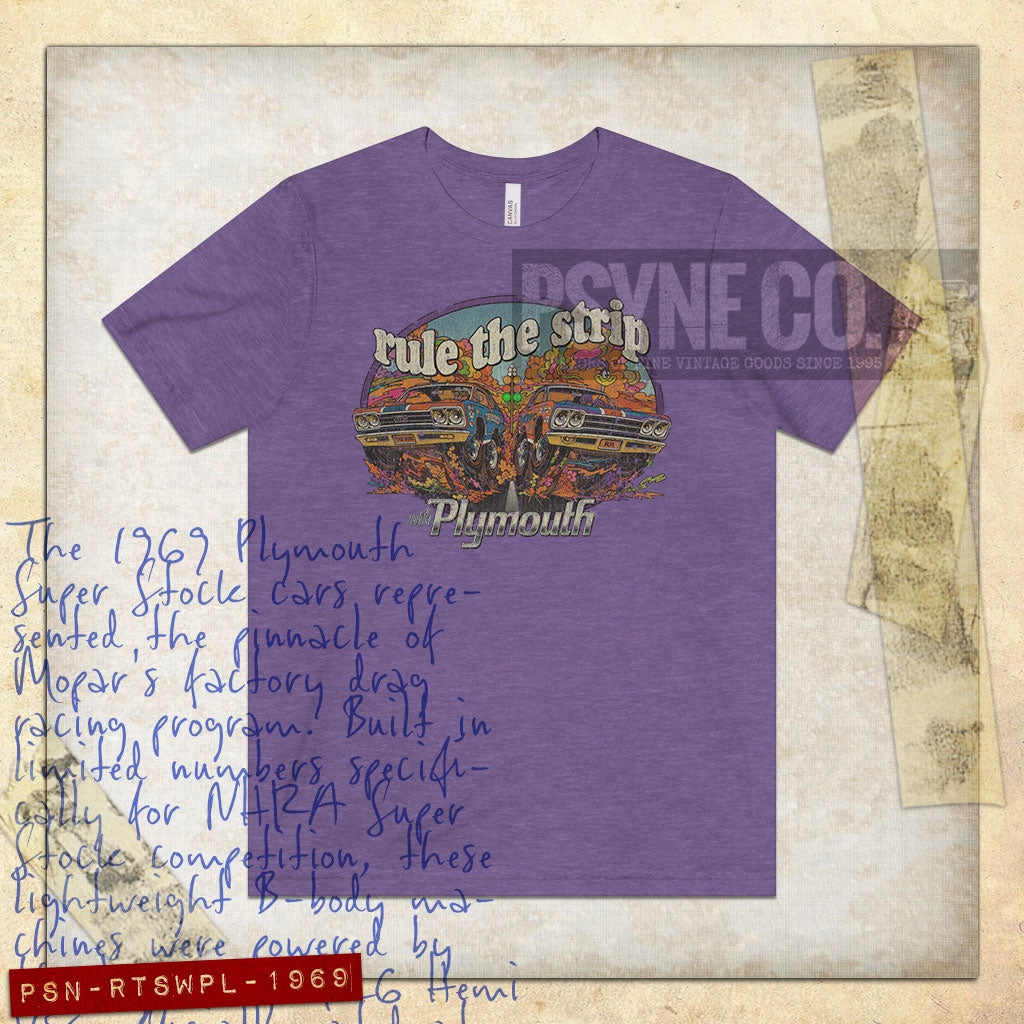
Few platforms have had a greater impact on American drag racing than the Plymouth B-body. Introduced in 1962 and continually refined throughout the muscle car era, the B-body served as the foundation for some of the fastest and most successful factory-backed drag cars ever built. Models such as the Belvedere, Satellite, GTX, Road Runner, and later the Superbird combined lightweight construction, generous engine bays, and rugged engineering into a package that was perfectly suited for quarter-mile competition.
When Chrysler unleashed its legendary 426 Race Hemi in 1964, the B-body became the weapon of choice for factory drag racers. The combination was devastating. The B-body’s relatively light weight and excellent weight transfer allowed racers to put immense horsepower to the pavement, while Chrysler’s rugged driveline components stood up to repeated hard launches. By the late 1960s, Hemi-powered Plymouths had become dominant forces in NHRA Super Stock competition, regularly filling winner’s circles across the country.
 Perhaps the most famous examples were the 1968 Hemi Dart and 1968 Hemi Barracuda factory lightweight programs, but the standard B-body platform remained the backbone of Plymouth’s racing efforts. Specially prepared 1968 and 1969 Super Stock Road Runners, Satellites, and Belvederes featured fiberglass body panels, lightweight interiors, relocated batteries, race suspension components, and carefully tuned Hemi engines that could produce far more than their conservative factory ratings. These purpose-built machines routinely ran deep into the 10-second range—astonishing performance for factory-produced automobiles of the era.
The B-body’s success wasn’t limited to factory teams. Weekend racers quickly discovered that the platform was exceptionally easy to modify. Engine swaps were straightforward, aftermarket support grew rapidly, and nearly every component could be upgraded for more power or durability. Whether powered by a 383, 440 Six Barrel, Max Wedge, or 426 Hemi, Plymouth B-bodies became fixtures at local drag strips throughout North America.
Their influence extended well beyond the muscle car years. As original Super Stock cars became increasingly valuable, countless enthusiasts continued racing B-body Plymouths in nostalgia events, bracket racing, and vintage NHRA classes. Today, they remain among the most recognizable and sought-after drag racing machines ever built.
More than fifty years after their heyday, Plymouth B-bodies still represent the golden age of factory horsepower. Their combination of bold styling, brutal acceleration, and unmatched racing pedigree helped define the muscle car era and cemented Mopar’s reputation as one of drag racing’s most formidable competitors. Few cars have left a deeper set of tire marks on quarter-mile history.