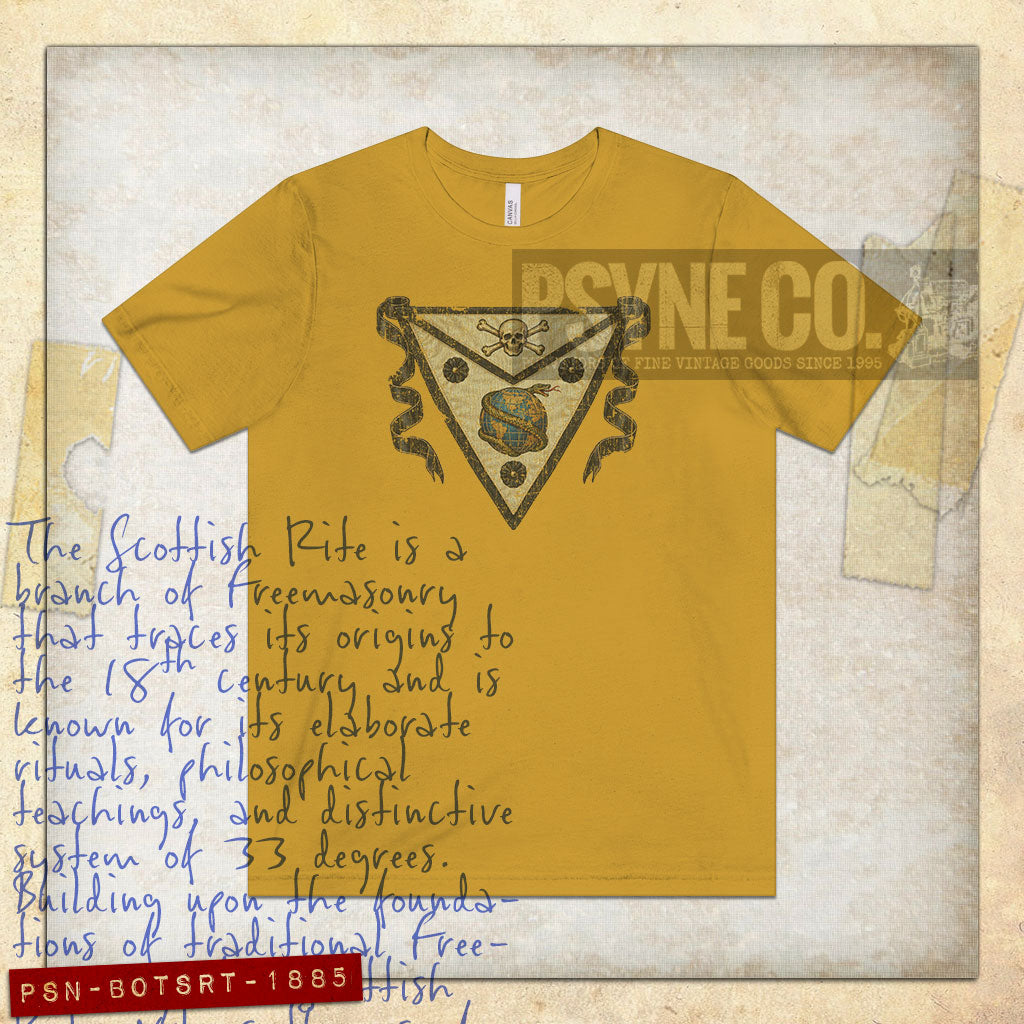
Steeped in centuries of tradition, elaborate ceremonies, and mysterious symbolism, the Ancient and Accepted Scottish Rite of Freemasonry is one of the most recognizable branches of the world’s oldest surviving fraternal traditions. Known for its distinctive double-headed eagle emblem, ornate ceremonial regalia, and legendary 33 degrees, the Scottish Rite has long fascinated historians, conspiracy theorists, and curious outsiders alike. Despite its somewhat misleading name, the Scottish Rite did not actually originate in Scotland. Its roots can be traced primarily to 18th-century France, where increasingly elaborate forms of Freemasonry developed before spreading across Europe, the Caribbean, and eventually North America.
The Scottish Rite formally established itself in the United States on May 31, 1801, when the first Supreme Council of the 33rd Degree was organized in Charleston, South Carolina. Building upon the three foundational degrees of traditional Freemasonry, the Scottish Rite introduced a system of additional degrees designed to explore philosophy, morality, justice, spirituality, and the pursuit of enlightenment. These degrees, numbered four through 32, employ dramatic presentations, historical allegories, and elaborate rituals to communicate their teachings. The prestigious 33rd Degree is reserved for members recognized for exceptional service to Freemasonry or humanity. Contrary to popular misconception, attaining the 33rd Degree does not grant a Mason authority over ordinary Masonic lodges, as the Master Mason’s Degree remains the highest degree within traditional lodge Freemasonry.
Much of the Scottish Rite’s mystique comes from its rich collection of symbols and ceremonial traditions. Its famous double-headed eagle, often depicted with wings spread beneath a crown, is one of the organization’s most enduring emblems. Other imagery includes swords, crowns, crosses, compasses, and architectural symbols, each carrying philosophical or moral significance. Members participate in theatrical degree ceremonies that can involve elaborate costumes, stage sets, dramatic lighting, and centuries-old traditions. During the 19th and early 20th centuries, impressive Scottish Rite temples and cathedrals appeared in cities across America, some featuring enormous auditoriums, intricate architectural details, and Egyptian, Gothic, or classical influences. These imposing buildings, combined with the organization’s private ceremonies, helped cultivate an enduring public fascination with what went on behind their doors.
One of the most influential figures in American Scottish Rite history was Albert Pike, who became Sovereign Grand Commander of the Southern Jurisdiction in 1859. A lawyer, writer, and scholar, Pike spent decades studying and revising the organization’s rituals and philosophical teachings. His monumental 1871 work, Morals and Dogma of the Ancient and Accepted Scottish Rite of Freemasonry, explored the moral and symbolic lessons associated with the Rite’s degrees, drawing upon philosophy, religion, mythology, and ancient history. Although often misunderstood as a secret religious text, the book was intended as an exploration of the philosophical ideas woven throughout Scottish Rite Masonry.
Today, the Scottish Rite remains active throughout the United States and around the world, continuing its traditions of fellowship, education, philanthropy, and personal development. American members belong to either the Northern Masonic Jurisdiction or the Southern Jurisdiction, with charitable efforts supporting educational scholarships, childhood language programs, dyslexia treatment, and community initiatives. While the organization has inspired countless theories about secret knowledge, hidden power, and ancient mysteries, its stated purpose remains considerably more down-to-earth: encouraging members to become better individuals through moral instruction, intellectual exploration, and service to others. Still, with its ceremonial swords, ornate rings, mysterious emblems, and centuries of carefully preserved traditions, the Scottish Rite continues to occupy a fascinating place where history, philosophy, and the enduring allure of the unknown come together.