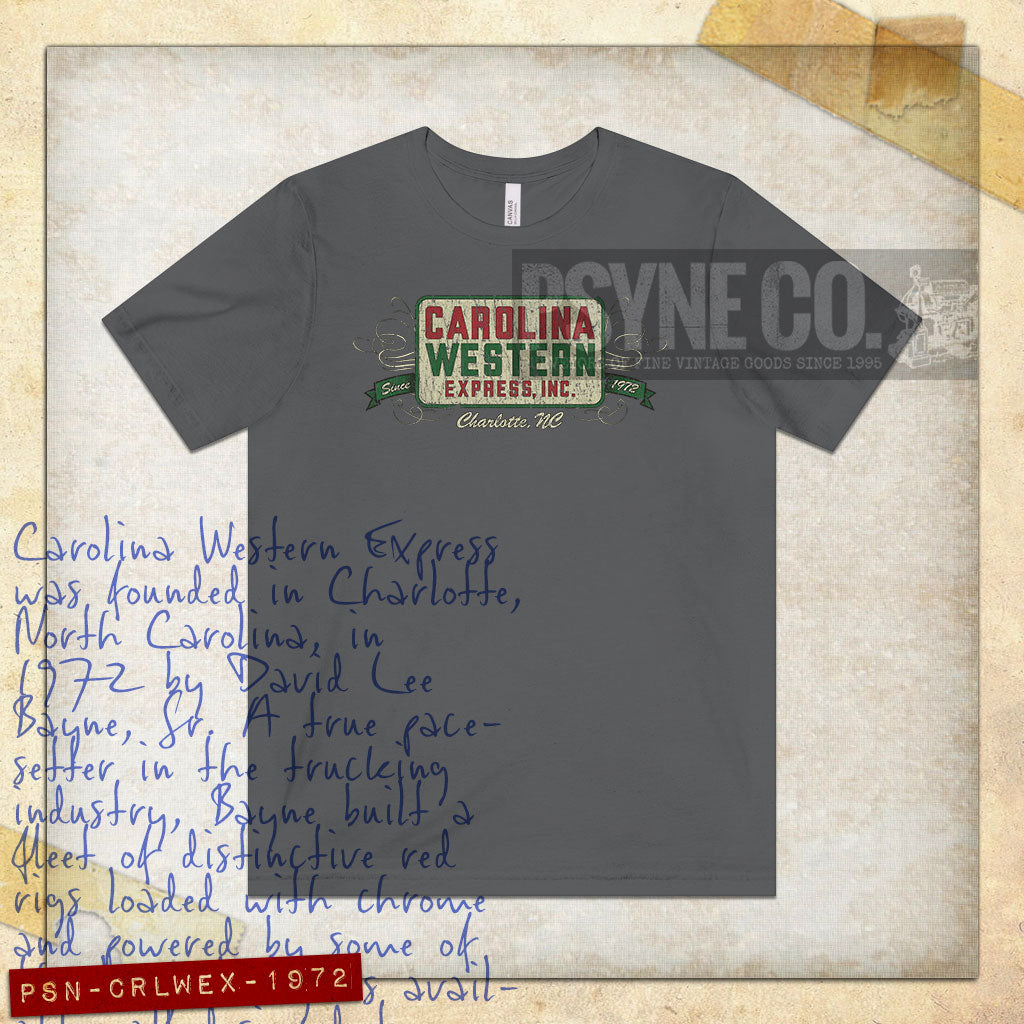
Carolina Western Express, also known as Carolina Western Trucking Company, was a North Carolina-based freight carrier founded in 1972 by David Lee Bayne Sr. and his wife, Peggy Grindstaff Bayne. Operating out of the Charlotte–Gastonia area, the company became known for its fast coast-to-coast freight service, powerful trucks, and unmistakable red-and-white fleet. Bayne was no stranger to the trucking business, having learned the ropes working alongside his father at Bayne Transport in Greensboro, North Carolina. Drawing on that experience, he built Carolina Western into a respected long-haul operation with a reputation for moving freight across the country in remarkably short order.
Carolina Western’s claim to fame was its ambitious transcontinental delivery schedule. The company reportedly maintained a 52-hour service between the Carolinas and California, with trucks making weekly coast-to-coast journeys totaling approximately 5,000 miles. To accomplish this, Bayne equipped his fleet with some of the largest engines available, favoring powerful tractors with plenty of chrome and polished metal. The company’s red cabover Peterbilts, Freightliners, and other heavy-duty rigs became familiar sights on America’s interstate highways throughout the 1970s and 1980s. Speed and efficiency were central to the operation, and Carolina Western developed a particularly strong following among professional drivers who appreciated its equipment and management.
The company hauled a wide variety of freight, including textiles, carpeting, furniture, and general merchandise. In 1973, Carolina Western sought authorization to transport products for Burlington Industries from North Carolina and Tennessee to Los Angeles, an early example of its long-distance operations. The company expanded its reach throughout the decade, pursuing additional operating rights and freight contracts. In 1977, Carolina Western applied to acquire portions of the operating authority of bankrupt Glosson Motor Lines, helping broaden its potential service territory. Bayne also established related transportation businesses, including Westway Express of California, Jetway Air Express, and Sterling Equipment Company, the latter specializing in rebuilding and maintaining the company’s trucks and mechanical components.

Carolina Western was also an early proponent of expedited less-than-truckload (LTL) shipping, offering scheduled three-day delivery of smaller freight shipments from the Carolinas to the West Coast. This approach helped distinguish the company from traditional truckload carriers and reflected Bayne’s determination to improve freight transportation through better equipment, scheduling, and logistics. Beyond the trucks themselves, Bayne cultivated considerable loyalty among his employees, many of whom remembered him as a hands-on trucking man who understood the business from behind the wheel as well as behind a desk.
Carolina Western continued operating into the following decades, although its eventual disappearance from the highways is not especially well documented. Federal transportation records indicate that its operating authorities were administratively inactivated in December 1999, bringing an end to the company’s regulatory presence as an active interstate carrier. David Lee Bayne Sr. passed away on January 3, 2010, at the age of 78, leaving behind a legacy of innovation in long-distance trucking. Today, Carolina Western is remembered by vintage trucking enthusiasts for its distinctive red rigs, polished chrome, and extraordinarily ambitious delivery schedules—a reminder of an era when independent carriers could make a name for themselves by building powerful trucks and getting the freight there faster than the competition.